

Equipment rental
Sound Equipment Rental for Events
Microphones, loudspeakers and mixing for conferences, panels and ceremonies. Sized to the room and to speech, which is a different job from filling a hall with music.
- 01Delegate and handheld mics
- 02Frequency coordination
- 03Speech-first coverage
Microphones
- Handheld radio microphones for questions from the floor and for moderators who move.
- Lavalier sets for speakers who need both hands and forget the microphone exists.
- Gooseneck table microphones for panels and delegate tables, one per seat where the format needs it.
- Overhead microphones where the ceiling is the only place a microphone can go.
Loudspeakers and mixing
- Loudspeakers positioned for even coverage, so the back rows hear the same level as the front.
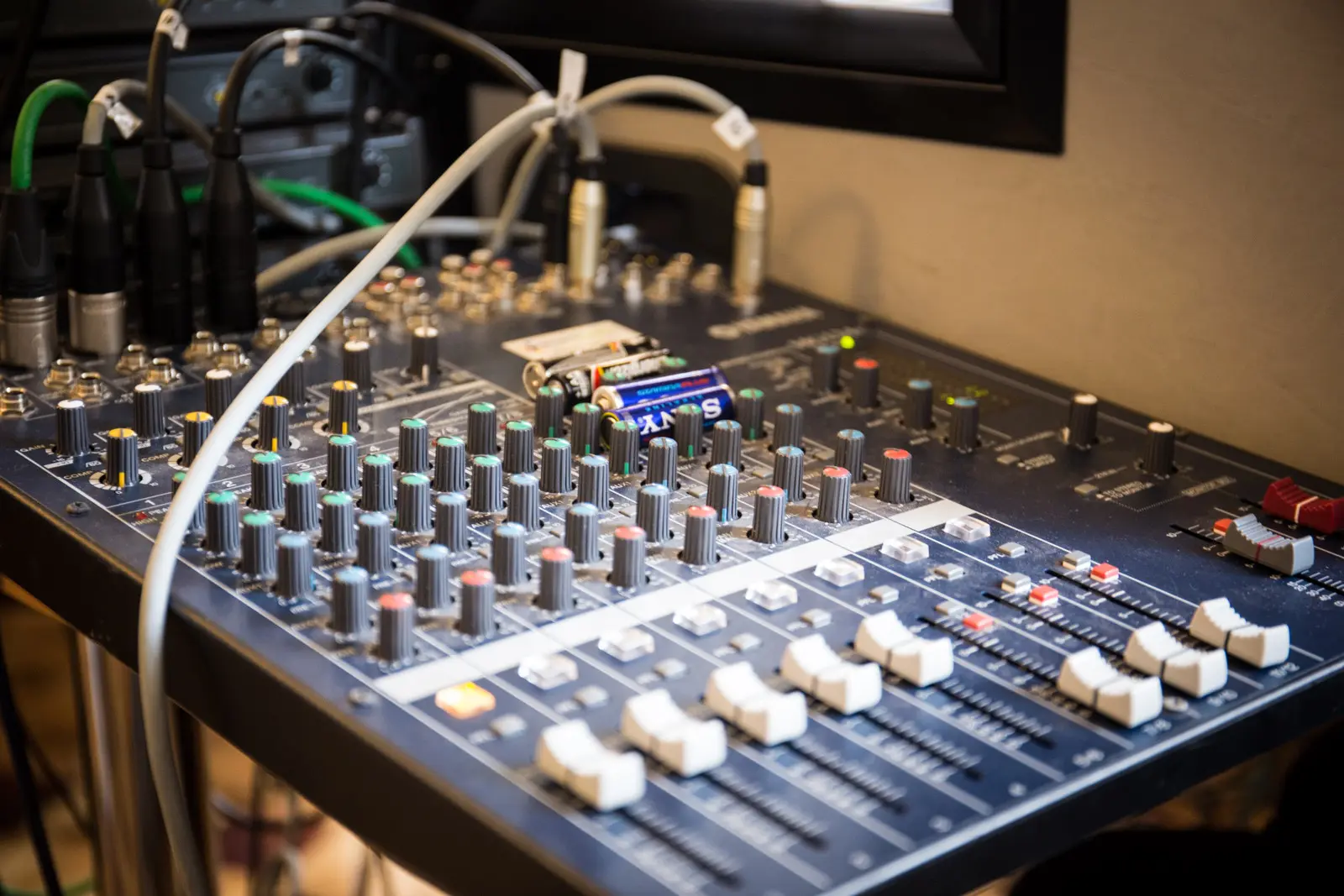
- Mixing consoles that keep quiet and loud speakers at a comparable level without riding the fader all session.
- Frequency coordination for the radio microphones, so nothing drops out when the room next door starts.
Speech first
Conference sound is judged by whether a sentence from the back of the room is understood the first time. Intelligibility, even coverage and stable levels matter more than power ratings.
Every device is checked before it leaves, and the system is tuned in the room rather than set up to a preset. A technician stays for the event, which is when adjustments are actually needed.
Sizing the system
- Microphone count follows the format: one per seat for a panel, one at the lectern and at least one roaming unit for questions from the floor.
- Radio microphones need frequency coordination, and the number of simultaneous channels is what makes that job harder, not the number of devices in the case.
- Loudspeaker positions follow the depth of the room. A long hall needs coverage that does not fall away at the back rather than more power at the front.
- Mixing channels are counted from microphones plus playback plus the interpretation feed, if the event has one.
- Recording and a feed for the stream are planned at the same time as the room sound, because taking them off the same mix afterwards rarely works.
The room decides, not the spec sheet
Conference sound is judged on one thing: whether a sentence from the back of the room is understood the first time it is said. That is intelligibility, and it depends more on placement and on the room than on the power rating of any box.
A hall with hard surfaces and a long reverberation tail defeats loud speakers. The answer is coverage, level discipline and gain structure set in that room, on that day. This is why the system is tuned on site instead of being brought in on a preset, and why a technician stays: the settings that matter are the ones made while people are actually speaking.
Questions organisers ask
Questions organisers ask
Other equipment
Request a quote
Tell us about the event
Three answers are enough to start. We come back with a quote that lists the equipment line by line, not a price range.